Table of Contents
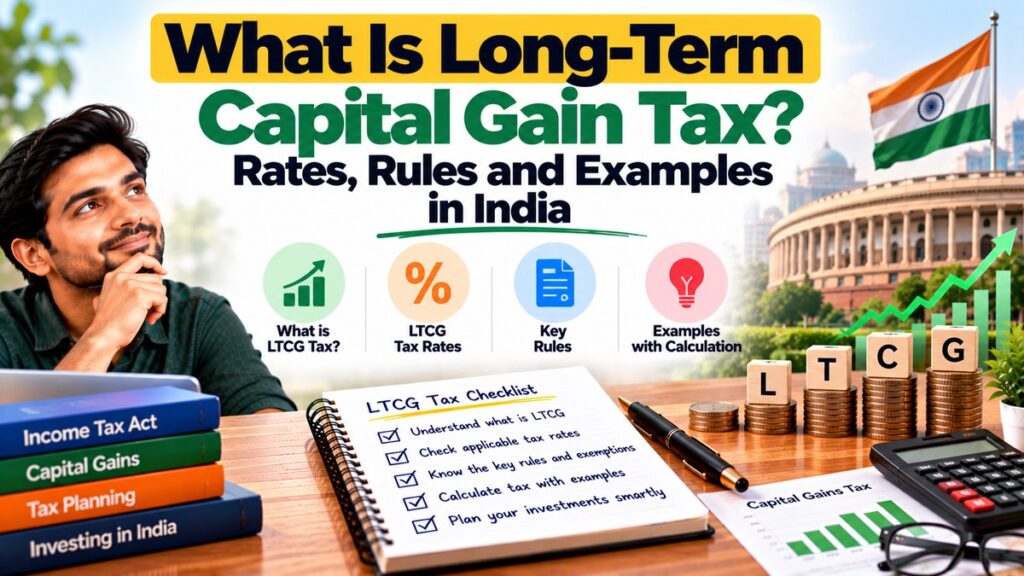
Understanding what is long-term capital gain tax is essential for Indian investors who want to keep more of their investment profits. When you sell shares, mutual funds, property, or other capital assets for a profit, the amount you earn may be subject to capital gains tax. The applicable rate depends on the asset, how long you held it, and the date of sale.
At Stock Charcha, we believe financial literacy means understanding not only how investments grow but also how taxes affect the money you take home. This guide explains the rules, tax rates, calculation method, and practical considerations for investors in India.
What Is Long-Term Capital Gain Tax?
Long-term capital gains (LTCG) tax is the tax applicable to eligible profits earned when you sell a capital asset after holding it for the required period. The profit—not the entire sale value—is generally considered for capital gains taxation, subject to applicable deductions, exemptions, and special rules.
For example, suppose you buy listed shares for ₹1,00,000 and later sell them for ₹1,60,000. Your gain is ₹60,000 before eligible expenses and other adjustments. Whether this is a long-term gain depends on the holding period and the applicable tax provisions.
You can explore the basics of investing through Stock Charcha’s stock market guide for beginners in India.
How Long Must You Hold an Asset for It to Qualify as Long-Term?
The required holding period varies by asset. Under the rules applicable to transfers on or after 23 July 2024, the broad categories include:
| Asset type | General holding period to qualify as long-term |
|---|---|
| Listed equity shares | More than 12 months |
| Equity-oriented mutual fund units | More than 12 months |
| Listed securities covered by the relevant rules | Generally more than 12 months |
| Immovable property, such as land or buildings | More than 24 months |
| Many other capital assets | Generally more than 24 months, subject to specific rules |
Some assets have special tax treatment and may be treated as short-term regardless of the holding period. The classification should therefore be checked for the specific investment you own.
Before investing, learn how to start investing in the stock market and understand the difference between trading and investing.
What Are the Long-Term Capital Gain Tax Rates in India?
For transfers made on or after 23 July 2024, the general LTCG rate is 12.5% without indexation. However, specified listed equity shares, equity-oriented mutual funds, and units of business trusts covered under Section 112A have a separate threshold-based rule.
| Asset or investment category | General tax treatment for eligible long-term gains |
|---|---|
| Listed equity shares covered by Section 112A | 12.5% on aggregate eligible gains exceeding ₹1.25 lakh in a financial year |
| Equity-oriented mutual funds covered by Section 112A | 12.5% on eligible gains exceeding ₹1.25 lakh in a financial year |
| Other eligible long-term capital assets | Generally 12.5% without indexation |
| Certain qualifying property acquired before 23 July 2024 | Resident individuals and Hindu Undivided Families may have an option to compare the old 20% rate with indexation against the new method, subject to conditions |
Applicable surcharge and health and education cess may increase the final tax payable. Section 112A also has conditions relating to Securities Transaction Tax (STT) and eligible transactions.
For current details, consult the Income Tax Department’s guidance on tax when selling shares.
How Is Long-Term Capital Gain Tax Calculated on Shares?
To understand what is long-term capital gain tax in practice, consider an illustrative example.
Suppose you purchased eligible listed equity shares for ₹2,00,000 and later sold them for ₹3,80,000. Assume there are no eligible transaction expenses or other adjustments.
- Purchase cost: ₹2,00,000
- Sale value: ₹3,80,000
- Capital gain: ₹1,80,000
- Annual Section 112A threshold: ₹1,25,000
- Potential taxable gain above the threshold: ₹55,000
At 12.5%, the basic tax on ₹55,000 would be ₹6,875, before any applicable cess or surcharge. This simplified example assumes the entire gain qualifies under Section 112A and that you have no other eligible gains using the same annual threshold.
Your actual tax calculation may differ depending on your transactions, acquisition dates, expenses, and eligibility. You can use the Stock Charcha share capital gains tax calculator to help estimate gains and review the inputs carefully.
Does Long-Term Capital Gain Tax Apply to Mutual Funds?
Yes, but the tax treatment depends on the type of mutual fund and the applicable provisions.
Eligible equity-oriented mutual fund units held for more than 12 months generally fall under Section 112A. For qualifying gains, the 12.5% rate applies to aggregate gains exceeding ₹1.25 lakh in a financial year.
Debt-oriented and other mutual funds may follow different rules. In particular, specified mutual funds covered by special provisions can be treated as short-term capital assets for tax purposes regardless of how long they are held. Do not assume every mutual fund becomes eligible for the same LTCG treatment after one year.
Investors should understand the product before investing. Stock Charcha’s guides to mutual funds and ETFs and ETFs in India can help explain how these investment options differ.
Is Long-Term Capital Gain Tax Applicable to Property?
Yes. Profits from selling land or a building may qualify as long-term capital gains when the property is held for more than 24 months, subject to the applicable provisions.
For eligible transfers on or after 23 July 2024, the general LTCG rate is 12.5% without indexation. However, resident individuals and Hindu Undivided Families selling land or buildings acquired before 23 July 2024 may be able to compare the new method with the earlier 20% rate with indexation, where the statutory conditions are met.
Indexation adjusts the historical acquisition cost to reflect inflation. Because eligibility and calculations can be complicated, property sellers should check the rules that apply to their specific acquisition and transfer dates before estimating tax.
What Can Investors Do to Manage Long-Term Capital Gains Tax?
Tax planning should begin before selling an investment. Consider these practical steps:
- Check your holding period: Confirm whether the asset qualifies as long-term under the relevant rules.
- Maintain transaction records: Keep purchase confirmations, sale statements, contract notes, and details of eligible expenses.
- Review the annual exemption threshold: For eligible Section 112A gains, track the aggregate amount across qualifying transactions during the financial year.
- Check applicable exemptions: Certain reinvestment provisions may be available for eligible capital gains, but conditions and deadlines apply.
- Verify current tax rules: Tax rates, exemptions, and reporting requirements can change. Consult the official Income Tax Department guidance or a qualified tax professional.
You can also read HMA Wealth’s guide to common investing mistakes to understand why investors should consider exit costs and taxes alongside investment returns.
Why Should Investors Understand Long-Term Capital Gain Tax Before Selling?
Knowing what is long-term capital gain tax helps investors estimate their post-tax returns and make better-informed decisions. A profitable investment does not automatically mean the entire gain will be available to spend or reinvest.
For example, two investments may deliver similar pre-tax profits but have different tax outcomes because of their asset type, holding period, or eligibility for special provisions. Considering tax implications in advance can help you plan cash flows and avoid surprises when filing your income tax return.
At Stock Charcha, our goal is to make financial concepts easier to understand so investors can ask better questions and make informed decisions. Use this article as an educational starting point, verify the rules applicable to your situation, and seek professional tax advice when needed.
Disclaimer: This article is for educational purposes only and is not tax, legal, or investment advice. Capital gains tax depends on the facts of each transaction and the law applicable to the relevant assessment year. Verify the latest provisions with the Income Tax Department or a qualified tax professional before filing your return or making a financial decision.
FAQs – What Is Long-Term Capital Gain Tax?
What Is Long-Term Capital Gain Tax in India?
Long-term capital gain (LTCG) tax is the tax charged on eligible profits from selling assets held for the required period. The applicable rate depends on the asset type, holding period, sale date, and relevant tax provisions. Listed equity shares and eligible equity mutual funds have specific rules.
What Is the LTCG Tax Rate on Shares in India?
For eligible listed equity shares covered under Section 112A, the LTCG tax rate is generally 12.5% on aggregate eligible gains exceeding ₹1.25 lakh in a financial year for transfers on or after 23 July 2024. Applicable conditions, cess, and surcharge may affect the final tax payable.
How Long Must I Hold Shares for Long-Term Capital Gains?
Listed equity shares generally qualify as long-term capital assets when held for more than 12 months. The holding period and classification rules may differ for other investments, so check the provisions applicable to your specific asset and transaction date.
Is Long-Term Capital Gain Tax Applicable to Mutual Funds?
Yes. Eligible equity-oriented mutual funds generally follow Section 112A rules when held for more than 12 months. However, debt-oriented and certain other mutual funds may receive different tax treatment. Investors should check the fund category and current provisions before calculating tax.
Is Long-Term Capital Gain Tax Applicable to Property?
Yes. Profits from selling land or buildings may qualify as long-term capital gains when the property is held for more than 24 months. The applicable tax calculation can depend on the sale date, acquisition date, and eligibility for specific provisions or exemptions.