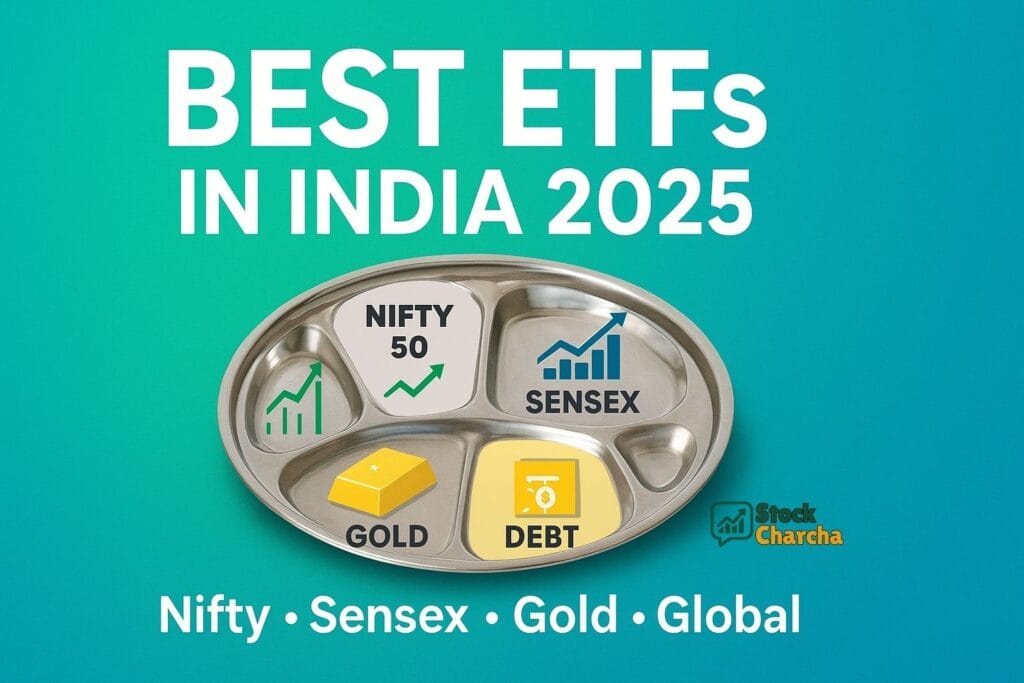
Introduction to ETFs & Index Investing in India
Exchange Traded Funds (ETFs) aur Index Investing aaj ke time pe 2025 me Indian retail investors ke beech kaafi popular ho rahe he. Traditional actively managed funds me fund managers buy/sell decisions lete he, lekin ETFs aur index funds simply ek market index (jaise Nifty 50 ya Sensex) ko track karte he aur uska performance mirror karne ki koshish karte he.
In simple words, ETFs allow you to:
- Ek hi transaction me ek basket of stocks me invest karna
- Diversification lena bina har stock individually pick kiye
- Lower cost enjoy karna compared to actively managed mutual funds
Globally, ETFs ne popularity me mutual funds ko peeche chhod diya he, aur ab India bhi tezi se catch up kar raha he. AMFI aur NSE ke data ke according, ETFs ka AUM (Assets Under Management) pichle kuch saalon me bohot fast grow hua he, jahan retail investors passive investing strategies adopt kar rahe he.
Why Index Investing is Gaining Popularity in India?
✔️ Low Cost: ETFs ka expense ratio normally 0.1% -0.3% ke beech hota he, jo actively managed funds se kaafi sasta he.
✔️ Transparency: Investors ko clear hota he ki ETF me kaunse stocks included he, kyunki wo ek published index mirror karta he.
✔️ Performance: Kai active funds apne benchmark index ko long term me beat nahi kar paate. Passive investing is problem ko solve karta he.
✔️ Ease of Access: Discount brokers jaise Zerodha, Groww, aur Upstox ke through ETFs buy karna ab stock kharidne jitna simple ho gaya he.
Global vs Indian ETF Trends in 2025
🌍 US aur Europe me ETFs already market dominate karte he with trillions of dollars invested.
🇮🇳 India abhi growth stage pe he, lekin SEBI regulations, lower costs aur digital platforms ki wajah se ETF adoption fast ho raha he.
2025 tak hume aur zyada smart-beta ETFs, thematic ETFs aur international ETFs Indian market me dekhne ko milenge.
👉 Yeh tha ek short & simple breakdown ETFs aur Index Investing ka, jo aapko samjhata he ki future investing India me kis direction me ja raha he. Stock Market for Beginners India 2025: Easy Guide bas yeh padhiye start karne ke liye stock market friendly guide.
What are ETFs in India 2025: Complete Guide
Exchange Traded Fund (ETF) ek aisa investment fund hota he jo kisi stock market index, commodity, ya sector ko track karta he aur stock exchange par ekdum stock ki tarah trade hota he.
India me ETFs kaafi rapidly grow hue he pichle ek decade me, aur 2025 me yeh beginners aur experienced investors dono ke liye ek preferred option ban gaye he apne portfolio ko diversify karne ke liye.
How Do ETFs Work?
Jab aap ek ETF ka share kharidte ho, toh aap actually ek basket of securities kharid rahe hote ho jo us index ko mirror karta he.
👉 Example: Agar aap Nifty 50 ETF kharidte ho, toh aap indirectly Nifty 50 Index ke saare 50 companies me invest kar lete ho -bina unhe individually kharidne ke. Matlab ek hi ETF unit se pura index aapke paas.
Types of ETFs in India (2025)
- Equity ETFs -Track karte he bade indices jaise Nifty 50, Sensex, Nifty Next 50.
- Sectoral / Thematic ETFs -Focus karte he specific sectors jaise Banking, IT, PSU.
- Debt ETFs -Invest karte he government securities ya bonds me.
- Gold ETFs -Gold me exposure dete he bina physical gold hold kiye.
- International ETFs -Track karte he global indices jaise S&P 500, Nasdaq 100.
Why are ETFs Popular in India?
✔️ Low Expense Ratio -Actively managed funds ke comparison me ETFs ka cost kaafi kam hota he.
✔️ Liquidity -ETFs ko aap stock ki tarah trading hours me easily buy/sell kar sakte ho.
✔️ Transparency -Investors ko clear hota he ki ETF ka portfolio kis stocks me invested he.
✔️ Diversification -Ek ETF kharidkar aap multiple stocks me invest karte ho, jo risk kam karta he.
Future of ETFs in India 2025 & Beyond
Retail investors, mutual fund houses aur institutional investors ki increasing participation ki wajah se, ETFs 2025 aur uske baad Indian capital markets me aur bada role play karenge.
👉 Yeh guide beginners ke liye ek strong starting point he samajhne ke liye ki ETFs kya hote he aur 2025 me inka future India me kitna promising he.
Top 10 Best ETFs to Invest in India 2025
Aaj ke time par itne saare ETFs available he ki beginners ke liye best ETF choose karna kaafi confusing ho sakta he. Truth ye he ki sabke liye ek “perfect ETF” nahi hota. Lekin aap objectively compare kar sakte ho using kuch important parameters jaise Expense Ratio, AUM (Assets Under Management), Liquidity, aur Tracking Error.
Yeh factors batate he ki koi ETF kitna cost-efficient, reliable aur trade karne me easy he.
Key Parameters to Evaluate ETFs
✔️ Expense Ratio -Lower expense ratio = long-term me higher net returns.
✔️ AUM (Assets Under Management) -High AUM ka matlab zyada trust aur liquidity.
✔️ Liquidity -High trading volume wale ETFs ko buy/sell karna easy hota he.
✔️ Tracking Error -Jitna chhota gap ETF ke return aur index ke return ke beech, utna hi better.
List of Popular ETFs in India (2025)
📌 Note: Data educational purpose ke liye he, exact figures time ke saath change ho sakte he. Hamesha fund house ya NSE ki official website check karein.
| ETF Name | Index Tracked | Expense Ratio | Category |
| Nippon India ETF Nifty BeES | Nifty 50 | ~0.05% | Equity |
| SBI ETF Nifty 50 | Nifty 50 | ~0.05% | Equity |
| HDFC Sensex ETF | BSE Sensex | ~0.10% | Equity |
| ICICI Prudential Nifty Next 50 ETF | Nifty Next 50 | ~0.15% | Equity |
| Kotak Banking ETF | Nifty Bank | ~0.20% | Sectoral |
| Nippon India ETF Gold BeES | Gold Price | ~0.80% | Commodity |
| Motilal Oswal Nasdaq 100 ETF | Nasdaq 100 | ~0.50% | International |
| UTI Nifty 50 ETF | Nifty 50 | ~0.07% | Equity |
| Axis Gold ETF | Gold | ~0.75% | Commodity |
| Bharat Bond ETF | Government Bonds | ~0.06% | Debt |
Things to Keep in Mind Before Investing
🔹 Past performance ≠ future guarantee -ETF returns market ke saath change hote he.
🔹 Apna risk profile aur investment goals hamesha evaluate karein.
🔹 ETF choose karne se pehle ensure karein ki usme sufficient liquidity ho.
2025 me ETFs beginners ke liye bhi aur long-term investors ke liye bhi ek smart aur low-cost option ban gaye he. Equity ETFs, Gold ETFs aur even International ETFs Indian investors ko diversification + transparency + lower cost offer karte he.
ETF vs Mutual Funds India 2025: Which is Better?
Naye investors ka sabse common sawaal hota he –ETF choose karein ya Mutual Fund?
Dono hi SEBI-regulated investment products he jo diversification aur safety dete he. Lekin inke beech kuch key differences hote he jaise cost, trading flexibility aur investor suitability.
Similarities Between ETFs & Mutual Funds
✔️ Dono hi investors ka paisa pool karke ek portfolio banate he.
✔️ Dono aapko ek diversified basket of securities ka exposure dete he.
✔️ Dono SEBI-regulated hote he aur strict guidelines follow karte he.
Key Differences -ETF vs Mutual Funds (India 2025)
| Feature | ETFs | Mutual Funds |
| Management Style | Passive (index track karte he) | Active ya Passive dono ho sakte he |
| Cost (Expense Ratio) | Very Low (0.05% -0.3%) | Higher (0.5% -2%) |
| Liquidity | Stock exchange par trade hote he market hours me | End-of-day NAV par buy/sell |
| Investment Mode | Demat & Trading Account required | SIP/Lump sum possible, Demat ki need nahi |
| Flexibility | Intraday buy/sell possible (stocks ki tarah) | Sirf daily transactions allowed |
| Transparency | Daily disclosure of holdings | Monthly/Quarterly disclosure |
| Suitability | Best for DIY investors jo trading apps aur Demat comfortable he | Best for beginners jo SIP aur easy investing prefer karte he |
Which is Better for Indian Investors in 2025?
👉 ETFs -Cost-efficient, transparent aur un investors ke liye best jo stocks ki tarah trade karna pasand karte he.
👉 Mutual Funds -Beginners ke liye convenient, SIP facility ke saath aur bina Demat account ke invest karne ka option.
✅ Bottom line: Ek single “better” option nahi he. Aapka choice depend karega aapke investing style, technology comfort aur long-term financial goals par.
Best Nifty 50 ETFs in India 2025
Nifty 50 Index India ka sabse zyada tracked benchmark he jo NSE (National Stock Exchange) par listed top 50 companies ko represent karta he across multiple sectors.
Beginners ke liye, ek Nifty 50 ETF buy karna sabse simple aur smart tareeka he Indian stock market ka exposure lene ka.
2025 me, kai leading AMCs (Asset Management Companies) Nifty ETFs offer kar rahe he jisme low expense ratio, high liquidity aur strong AUM (Assets Under Management) available he.
Why Nifty 50 ETFs are Popular in India
✔️ Diversification: Ek hi ETF se 50 large-cap companies ka exposure across different sectors.
✔️ Low Cost: Indian equities me invest karne ka sabse sasta aur efficient tareeka.
✔️ Benchmark Performance: Historically, kai active large-cap funds long-term me Nifty 50 ko beat nahi kar paate.
✔️ Liquidity: High trading volume hone ki wajah se buy/sell karna easy hota he.
Comparison of Top Nifty 50 ETFs in India (2025)
📌 Note: Data educational purpose ke liye he. Values time ke saath change ho sakti he. Latest updates ke liye NSE India ya AMC websites check karein.
| ETF Name | AMC | Expense Ratio | AUM (Approx.) | Liquidity |
| Nippon India ETF Nifty BeES | Nippon India | ~0.05% | ₹30,000+ Cr | Very High |
| SBI Nifty 50 ETF | SBI Mutual Fund | ~0.05% | ₹25,000+ Cr | High |
| UTI Nifty 50 ETF | UTI AMC | ~0.07% | ₹10,000+ Cr | High |
| ICICI Prudential Nifty ETF | ICICI AMC | ~0.05% | ₹8,000+ Cr | Medium |
| HDFC Nifty 50 ETF | HDFC AMC | ~0.07% | ₹6,000+ Cr | Medium |
Who Should Consider Nifty 50 ETFs?
👉 Beginners: Jo low-cost aur easy entry chahte he equity markets me.
👉 Long-term Investors: Jo index-based passive growth strategy prefer karte he.
👉 Cost-conscious Investors: Jo actively managed large-cap funds ke high cost avoid karna chahte he.
2025 me Nifty 50 ETFs Indian investors ke liye ek trusted aur cost-effective passive investment option ban chuke he. Agar aapko long-term me market ke top 50 companies ka exposure chahiye, toh Nifty ETF ek perfect fit ho sakta he.
Sensex ETFs India 2025: Complete Beginner Guide
Sensex (BSE 30 Index) India ka sabse purana aur trusted stock market benchmark he, jo Bombay Stock Exchange (BSE) par listed 30 top companies ko represent karta he.
Agar aapko simple aur cost-effective exposure chahiye India ke blue-chip stocks me, toh Sensex ETFs ek excellent option he.
Why Consider Sensex ETFs in 2025?
✔️ Legacy Index: 30 top Indian companies ko track karta he, jinka strong history he.
✔️ Diversification: Banking, IT, Energy, FMCG jaise leading sectors cover karta he.
✔️ Low Cost: Actively managed mutual funds ke comparison me lower expense ratio.
✔️ Passive Growth: Sensex performance replicate karta he bina stock picking ki tension ke.
Comparison of Top Sensex ETFs in India (2025)
📌 Note: Data educational purpose ke liye he. Exact details time ke saath change ho sakte he. Latest info ke liye hamesha BSE India ya AMC websites check karein.
| ETF Name | AMC | Expense Ratio | AUM (Approx.) | Liquidity |
| Nippon India ETF Sensex | Nippon India | ~0.10% | ₹2,500+ Cr | High |
| HDFC Sensex ETF | HDFC AMC | ~0.10% | ₹1,000+ Cr | Medium |
| ICICI Prudential Sensex ETF | ICICI AMC | ~0.10% | ₹800+ Cr | Medium |
| SBI Sensex ETF | SBI Mutual Fund | ~0.09% | ₹600+ Cr | Low-Medium |
Who Should Invest in Sensex ETFs?
👉 Investors preferring BSE over NSE: Jo specifically Sensex index exposure chahte he.
👉 Passive Investors: Jo simple, index-based investing prefer karte he without active stock picking.
👉 Diversifiers: Jinke paas already Nifty ETFs he aur Sensex add karke aur exposure lena chahte he.
Key Considerations for Investors
🔹 Liquidity -Nifty 50 ETFs ke comparison me Sensex ETFs ki liquidity thodi lower hoti he.
🔹 Tracking Error -Different AMCs ke ETFs me tracking error vary kar sakta he.
🔹 Best Suited For -Long-term investors jo buy & hold strategy prefer karte he, not frequent traders.
Final Thoughts
2025 me Sensex ETFs beginners aur experienced investors dono ke liye ek trusted aur low-cost option he jo Indian economy ke top 30 blue-chip companies ka exposure dete he. Agar aap BSE ke legacy index par believe karte ho, toh Sensex ETF ek strong addition ho sakta he aapke portfolio me.
Best Gold ETFs in India 2025
India me gold hamesha ek safe-haven asset maana gaya he chahe baat ho inflation ki, market volatility ki ya currency fluctuations ki.
2025 me digital investing ke rise ke saath, Gold ETFs (Exchange Traded Funds) ek popular option ban gaye he jisme aapko physical gold ki storage aur purity concerns ki tension nahi hoti.
Why Choose Gold ETFs in 2025?
✔️ No Storage Hassle: Units electronically Demat account me hold hote he.
✔️ High Purity: Har unit represent karta he 99.5% pure gold (as per SEBI guidelines).
✔️ Liquidity: Stock exchanges par easily buy/sell kar sakte ho.
✔️ Diversification: Equity-heavy portfolio me ek strong hedge ka kaam karta he.
Comparison of Top Gold ETFs in India (2025)
📌 Note: Data educational purpose ke liye he. Latest NAV, AUM & liquidity hamesha NSE/BSE ya AMC websites se verify karein.
| ETF Name | AMC | Expense Ratio | AUM (Approx.) | Liquidity |
| Nippon India Gold ETF | Nippon India | ~0.40% | ₹7,000+ Cr | High |
| SBI Gold ETF | SBI Mutual Fund | ~0.35% | ₹6,500+ Cr | High |
| HDFC Gold ETF | HDFC AMC | ~0.40% | ₹5,500+ Cr | Medium |
| ICICI Prudential Gold ETF | ICICI AMC | ~0.40% | ₹4,500+ Cr | Medium |
| Kotak Gold ETF | Kotak AMC | ~0.35% | ₹3,000+ Cr | Medium |
Who Should Consider Gold ETFs?
👉 Conservative Investors: Jo stability aur safety prefer karte he.
👉 Diversifiers: Jo apne equity portfolio ka risk kam karna chahte he.
👉 Long-term Wealth Planners: Jo inflation ke against hedge karna chahte he.
Things to Keep in Mind
🔹 Expense Ratio -Gold ETFs ka expense ratio equity ETFs se zyada hota he.
🔹 Returns Depend -International gold prices aur INR/USD movement ke upar.
🔹 Best Suited For -Long-term holding; frequent trading ke liye ideal nahi.
2025 me Gold ETFs ek reliable aur hassle-free option he un investors ke liye jo apne portfolio me safety + diversification chahte he. Agar aapko gold ka exposure chahiye bina storage aur purity ke issues ke, toh Gold ETFs ek smart choice ho sakte he.
ETF Taxation Rules India 2025 Explained
ETF investing me taxation ek crucial role play karta he. India me ETF ka tax treatment depend karta he ki wo Equity-Oriented ETF (jaise Nifty 50, Sensex) he ya Non-Equity ETF (jaise Gold ETFs, Debt ETFs).
Agar aapko rules clearly samajh aayenge, toh aap apna investment plan better bana paayenge aur Indian tax laws ke saath compliant bhi rahenge.
Taxation on Equity ETFs (Nifty, Sensex, Sectoral ETFs)
✔️ Short-Term Capital Gains (STCG): Agar ETF units 12 months ke andar bech dete ho → gains par 15% tax lagega.
✔️ Long-Term Capital Gains (LTCG): Agar ETF 12 months se zyada hold karte ho → ₹1 lakh tak ke gains tax-free, uske upar 10% tax (without indexation).
✔️ Dividends: Dividend income investor ke personal income tax slab ke according taxable hota he.
Taxation on Gold & Debt ETFs
✔️ Short-Term Capital Gains (STCG): Agar units 3 years ke andar sell karte ho → gains aapke income tax slab rate ke hisaab se taxable.
✔️ Long-Term Capital Gains (LTCG): Agar 3 years se zyada hold karte ho → 20% tax with indexation benefits.
✔️ Dividends: Dividend income slab rate ke according taxable.
ETF Taxation in India -Comparison (2025)
| ETF Type | STCG Tax | LTCG Tax | Holding Period for LTCG | Indexation Benefit |
| Equity ETFs (Nifty, Sensex) | 15% (≤12 months) | 10% (above ₹1L) | >12 months | ❌ No |
| Gold ETFs | Slab Rate (≤3 years) | 20% | >3 years | ✅ Yes |
| Debt ETFs | Slab Rate (≤3 years) | 20% | >3 years | ✅ Yes |
📌 Note: Ye tax rules FY 2024–25 ke liye Indian Income Tax Act ke basis par bane he. Hamesha latest updates ke liye CBDT circulars ya tax professional se confirm karein.
Key Takeaways
🔹 Equity ETFs -lower tax rates aur shorter holding period ka benefit dete he.
🔹 Gold & Debt ETFs -long-term investors ke liye indexation ka advantage dete he.
🔹 Taxation important he, lekin ETF choose karte waqt aapko goals, liquidity aur risk profile bhi consider karna chahiye.
2025 me ETF investing sirf cost aur diversification ke liye hi nahi, balki tax efficiency ke liye bhi ek smart choice ho sakta he. Agar aapko correct taxation rules pata he, toh aap apne investments ko smarter way me plan kar paoge.
How to Buy ETFs Online in India (2025)
ETFs (Exchange Traded Funds) aaj ke time me Indian retail investors ke liye ek simple aur cost-efficient way ban gaye he market me invest karne ka.
Thanks to discount brokers & mobile trading apps, aaj ETFs kharidna utna hi easy he jitna ek stock kharidna.
Chaahe aapko Nifty 50 ETF, Sensex ETF ya Gold ETF lena ho -aap easily NSE/BSE par apne Demat account ke through purchase kar sakte ho.
Step-by-Step Guide to Buying ETFs Online
1. Open a Demat & Trading Account
- ETF units electronic form me Demat account me hold hote he.
- Popular brokers: Zerodha, Groww, Upstox, Angel One, ICICI Direct, HDFC Securities.
2. Transfer Funds
- Trading account me paise add karo via UPI, Net Banking, NEFT/IMPS.
3. Search for the ETF
- Stock symbol use karke search karo (e.g., NIFTYBEES = Nippon India Nifty 50 ETF).
4. Place a Buy Order
- Quantity (units) & price type (Market/Limit) select karo.
- Market hours ke andar order instantly execute hota he, just like shares.
5. Hold in Demat Account
- Buy hone ke baad ETF units aapke Demat account me aa jaate he.
6. Track & Manage Investment
- ETF ka NAV performance, expense ratio & exit strategy monitor karte raho.
Popular Platforms to Buy ETFs in India (2025)
| Broker / Platform | Key Features | Best For |
| Zerodha (Kite) | Simple UI, low brokerage | Beginners & Active Traders |
| Groww | Mobile-first, free Demat | Young Retail Investors |
| Upstox | Discount broker, fast execution | Cost-conscious Investors |
| Angel One | Research reports + app | Mixed Investors |
| ICICI Direct / HDFC Securities | Full-service brokers | Traditional Investors |
Things to Keep in Mind Before Buying ETFs
✅ Liquidity matters -Hamesha high trading volume wale ETFs choose karo.
✅ Tracking Error check karo -Lower tracking error = better index performance.
✅ Expense Ratio -Ye directly long-term returns ko impact karta he.
✅ Market Hours Only -Mutual funds ki tarah after-market buy nahi kar sakte.
2025 me ETF investing India me aur accessible aur popular ho gayi he. Aapko sirf right broker, correct ETF selection aur proper exit strategy ki planning karni he.
Agar aap beginner ho toh pehle Nifty/Sensex ETFs start karo, phir gradually Gold & Sectoral ETFs explore karo.
Top ETF Brokers in India 2025
Aaj ke time me ETFs kaafi popular ho gaye he India me, lekin sahi broker choose karna bahut important he. ETFs NSE/BSE par trade hote he, isliye aapko ek SEBI-registered broker ke saath Demat & Trading account chahiye hota he.
Har broker apni alag strengths lekar aata he -kuch low-cost trading ke liye best he, to kuch research, advisory aur premium support dete he.
Factors to Consider While Selecting an ETF Broker
🔹 Brokerage Charges -Kam brokerage ka matlab zyada savings long-term me.
🔹 App / Platform Experience -Smooth aur fast app hona zaroori he trading ke liye.
🔹 Research & Tools -Agar aapko analysis pasand he, to research reports aur advanced charts helpful hote he.
🔹 Account Opening & AMC Fees -Zero ya low AMC beginners ke liye perfect he.
🔹 Customer Support -Pehli baar invest kar rahe ho? To acha support zaroori he.
Best Brokers for ETFs in India 2025
| Broker | Brokerage for ETFs | Key Features | Best For |
| Zerodha (Kite) | ₹20 ya 0.03% per order | India ka #1 discount broker, simple UI, advanced charts | Beginners & Active Traders |
| Groww | ₹20 per order | Mobile-first app, easy signup, no AMC | Young Retail Investors |
| Upstox | ₹20 per order | Fast execution, multiple products, low cost | Cost-Conscious Investors |
| Angel One | ₹20 per order | Research reports + advisory + trading app | Balanced Investors |
| ICICI Direct | Higher (plan-based) | Full-service broker, RM support | Traditional Investors |
| HDFC Securities | Higher (varies) | Trusted bank-backed broker | Conservative Investors |
Key Takeaways for Investors
✅ Discount brokers (Zerodha, Groww, Upstox) → Best for DIY investors jo low-cost ETF investing karna chahte he.
✅ Full-service brokers (ICICI Direct, HDFC Securities) → Suitable for un investors ko jo personal guidance & relationship manager support prefer karte he.
✅ Beginners → Focus karo ease of use + zero AMC pe.
✅ Experienced investors → Choose karo brokers jinke paas advanced tools, research reports aur charting features he.
SEBI ETF Guidelines India 2025 -Official Rules
SEBI (Securities and Exchange Board of India) India ka market regulator he jo ensure karta he ki ETFs transparent, safe aur fair ho trading ke liye. Agar aap 2025 me ETFs me invest kar rahe ho, to ye official SEBI guidelines samajhna bahut zaroori he.
Yeh rules hi ETFs ko ek trusted aur low-cost investment product banate he India me.
Key SEBI Rules for ETFs in India (2025)
1. Underlying Index Requirement
- Har ETF ko ek recognized index track karna chahiye (jaise Nifty 50, Sensex, Gold, ya sectoral indices).
- Index transparent, rules-based aur publicly available hona chahiye.
2. Minimum Asset Size & Investors
- SEBI ne minimum AUM (Assets Under Management) aur investor base ki requirement rakhi he taaki liquidity bana rahe.
3. Market Making & Liquidity
- ETF issuers ko market makers / authorized participants appoint karne hote he.
- Yeh ensure karta he ki investors ko buy/sell karte time price fluctuation zyada na ho.
4. Disclosure & Transparency
- ETF issuers ko daily portfolio disclosure karna mandatory he.
- NAV (Net Asset Value) bhi roz update karna padta he.
5. Expense Ratio Regulations
- ETFs ka expense ratio mutual funds se kam hota he.
- SEBI ke norms ensure karte he ki yeh reasonable aur investor-friendly rahe.
6. Taxation & Compliance
- ETFs ka tax treatment equity ya debt rules ke hisaab se hota he (asset class par depend karta he).
- Saare transactions SEBI’s KYC aur trading regulations ke under hote he.
Why SEBI Guidelines Matter for Investors
✅ Investor Protection -Mismanagement ko rokta he aur fair practices enforce karta he.
✅ Liquidity Assurance -Market making rules ensure karte he ki ETFs easily trade ho sakein.
✅ Transparency -Roz ke disclosures aur NAV updates investor ko informed rakhte he.
✅ Trust in ETFs -Strong regulation ETFs ko ek reliable aur safe product banata he Indian investors ke liye.
Risks & Challenges in ETF Investing in India (2025)
ETFs India me fast-growing investment product ban gaye he low cost, transparency aur easy trading ki wajah se. Lekin har investment ki tarah, ETFs ke saath bhi kuch risks aur challenges jude hote he. Agar aap beginner ho, to inhe samajhna bahut zaroori he taaki aap informed decisions le sako aur galtiyon se bacho.
Liquidity Risk in India (Low-Volume ETFs)
- ETFs exchange par trade hote he, mutual funds ki tarah directly AMC se nahi.
- Agar kisi ETF ka trading volume low he, to buy/sell karna mushkil ho sakta he aur price impact ho sakta he.
- Sectoral ETFs, International ETFs ya naye ETFs me liquidity ka issue zyada hota he.
- Beginners ke liye Nifty 50 ETFs, Sensex ETFs jaise high-volume funds best hote he.
Tracking Error Concerns
- ETF ka design hota he ki woh apne underlying index ko mirror kare.
- Lekin practically, ETF returns aur index returns me difference hota he ise tracking error kehte he.
- Causes of tracking error:
- Fund management costs
- Cash holdings
- Index rebalancing delay
- Dividend reinvestment timing
- Top ETFs India me low tracking error dete he, lekin thematic ya niche ETFs me deviation zyada ho sakta he.
- Investor ko hamesha ETF ka historical tracking error check karna chahiye before investing.
Misconceptions About ETFs in India
Bohot saare retail investors ke mind me ETFs ko lekar myths hote he. Kuch common misconceptions:
❌ “ETFs fixed returns dete he.” -Galat! ETFs market-based hote he aur ups/downs aate he.
❌ “ETFs risk-free he, jaise FDs.” -Galat! ETFs me equity ya debt market ka risk hota he.
❌ “Har ETF liquid hota he.” -Galat! Low-volume ETFs me exit karna mushkil ho sakta he.
👉 In misconceptions ko clear karna zaroori he taaki investors ETFs ko realistic expectations ke saath approach karein.
Key Takeaway for Investors
- ETF invest karne se pehle liquidity aur tracking error check karo.
- Misconceptions avoid karo aur hamesha product ko samajh kar invest karo.
- Long-term me ETFs ek cost-effective aur transparent investment option ban sakte he, lekin risks ko ignore karna galti hogi.
Future of ETFs & Index Investing in India (2025 & Beyond)
India me ETF aur index investing landscape tezi se evolve ho raha he. Awareness, SEBI regulations, aur retail + institutional investors ki participation ki wajah se ETFs ab sirf ek alternate nahi, balki core portfolio strategy ban rahe he. Aaiye dekhte he 2025 aur uske baad ke kuch key trends jo ETFs ka future shape karenge.
Smart Beta & Thematic ETFs in India
- Smart Beta ETFs traditional market-cap weighted indices se aage jaake value, quality, momentum, low volatility jaise factors follow karte he.
- India me ab thematic ETFs bhi launch ho rahe he jaise Banking ETFs, IT ETFs, EV (Electric Vehicle) ETFs, etc.
- Ye ETFs investors ko specific sector aur strategies me exposure dete he.
- ⚠️ Lekin dhyaan rahe: invest karne se pehle liquidity aur tracking error ko zaroor check karein.
International ETFs (Global Diversification with S&P 500, Nasdaq)
- Aaj ke globalised market me Indian investors bhi apna portfolio diversify karna chahte he.
- International ETFs jo S&P 500, Nasdaq, aur Global Tech indices ko track karte he, rapidly popular ho rahe he.
- In ETFs se aapko Apple, Microsoft, Google, Tesla jaise global leaders ka exposure milta he, bina foreign brokerage account khole.
- ⚠️ Lekin, dhyaan rahe ki currency risk aur SEBI ki overseas investment limits ko samajhna zaroori he.
Growing Adoption by Retail & Institutional Investors
- Pehle ETFs mainly large institutions use karte the, lekin ab retail investors bhi ETFs ko long-term wealth creation ke liye adopt kar rahe he.
- Pension funds, insurance companies, aur mutual funds bhi ETFs me zyada allocation kar rahe he due to cost efficiency & diversification.
- Ye widening participation liquidity ko improve karega, costs ko aur kam karega, aur naye innovative ETF products ko market me laye ga.
Key Takeaway for Investors
- ETFs ka future India me bright aur promising he.
- Smart Beta aur Thematic ETFs naya diversification option denge.
- International ETFs se aapko global exposure milega.
- Retail + Institutional adoption se liquidity aur efficiency dono improve honge.
👉 Agar aap ek retail investor ho, toh ETFs aapke long-term portfolio ka integral part ban sakte he bus correct product choose karna aur risk factors samajhna important he.
Conclusion: The Future of ETFs & Index Investing in India (2025)
India me ETFs aur index investing ka rise ek major shift ko represent karta he jahan investors traditional stock picking aur high-cost mutual funds se hatt kar low-cost, transparent aur diversified options prefer kar rahe he.
Key Takeaways for Investors
- Low-Cost Investing -ETFs ke expense ratios 0.05% tak low hote he, jo India ke sabse saste investment options me se ek he.
- Transparency & Simplicity -Daily portfolio disclosure se aapko hamesha pata rahta he ki paisa exactly kahan invest hua he.
- Growing Adoption – Nifty 50, Sensex, Gold aur International ETFs ki expanding variety retail aur institutional investors dono ko attract kar rahi he.
ETFs = The Future of Passive Investing in India
- Globally, ETFs already backbone of passive investing ban chuke he.
- India bhi rapidly is trend ko adopt kar raha he thanks to digital platforms, SEBI regulations aur rising investor awareness.
- 2025 ke baad aur bhi smart-beta, thematic aur international ETFs launch hone ki expectation he, jo passive investing ko aur strong banayenge.
👉 Beginners ke liye ETFs ek simple aur safe entry point provide karte he investing world me.
👉 Experienced investors ke liye ETFs ek efficient diversification tool ban jaate he.
In dono cases me, ETFs India ke liye long-term wealth creation ka ek promising avenue ban rahe he.
FAQs
What are Indian ETFs and how are they different from mutual funds?
Indian ETFs ek tarah ka passive investment hota hai jo kisi index jaise Nifty 50 ya Sensex ko track karta hai. ETF shares jaise hi buy/sell hota hai, aur mutual funds sirf ek hi din ke end mein trade hotey hain. ETFs mein intraday liquidity hoti hai aur transparent holdings hoti hai
Why should a beginner consider investing in Indian ETFs in 2025?
ETFs beginners ke liye great hain kyunki low cost, diversification aur easy liquidity milti hai. Aaj kal, Gen Z bhi low-fee aur transparent options jaise ETFs choose kar rahe hain. Aap small amounts se shuru kar sakte ho, bas ek demat account hona chahiye.
How has the Indian ETF market grown recently?
India mein ETF market steadily grow kar raha hai—March 2025 tak total AUM lagbhag ₹8.39-9 lakh crore ho gaya (13 % of mutual fund AUM), jo pichhle 5 saalon mein 5-5.5x badha hai. Ye growth credibility aur scale dikhata hai, specially SEBI-regulated environment mein.
What mistakes should new investors avoid when investing in ETFs?
A common beginner mistake hai investment goals ke bina ETFs khareed lena. Aap sirf trending ETF pe nahi jaana chahiye, aur over-diversify bhi avoid karo (same index ke multiple ETFs). Also, regular tracking chahiye—liquidity check karo aur tax implications consider karo. Apne goal ke hisaab se ETF plan karo, chilla-chilla ke nahi.
How can I invest in Indian ETFs what do I need to get started?
ETF invest karne ke liye aapko sirf demat aur trading account chahiye. India mein ETFs NSE ya BSE pe trade hote hain, just like stocks. Pehle goal set karo, phir ETF choose karo jiski expense ratio low ho aur achha tracking ho—fir buy karo SIP ya lump sum se.
Is it safe to invest in sector-specific ETFs like Nifty IT via systematic (staggered) investments?
Sector ETFs jaise Nifty IT mein systematic investing—jaise amount over time invest karna—long-term mein cost averaging aur risk control mein madad karta hai. Recent analysis bola hai ki agar aap long-term ke liye patient ho, to IT ETF mein staggered investing ek smart strategy ho sakti hai.
✍️ About the Author
I’m Hasanraza Ansari, founder of Stock Charcha, where I make investing in stocks and mutual funds simple for beginners and retail investors. I share practical strategies that I use myself to grow my investments. Personally, I rely on Zerodha for trading and mutual fund investments, and Navi for UPI payments with cashback perks. My goal is to help you invest smarter, avoid common mistakes, and take control of your financial journey. Follow me on LinkedIn for tips, insights, and strategies I personally use.
⚠️ Disclaimer: This content is for educational purposes only. Investing in the stock market involves risks, so always do your own research or consult a financial advisor before making decisions.